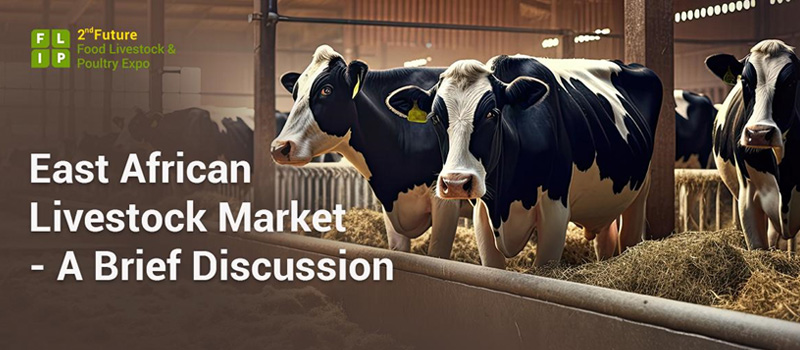
East Africa's diet is rich in nutrition, fats, and carbohydrates, primarily derived from cattle, sheep, goats, donkeys, camels, and poultry. Not only does the East African Livestock Market hold nutritional importance and contribute to its food and livestock sector, but it also has significant economic importance. A good proportion of the region's GDP is generated due to the upscaling of its food, income, and employment, which is a direct result of the earnings generated through these sectors.
In this blog, we will discuss how the East African Livestock Market has successfully positioned itself as one of the most important food sectors.
East African Livestock Industry Market Worth
According to Statista, the East African Meat Market has huge potential. Currently, the Meat market amounts to US$37.53bn in 2025 and is expected to grow annually by 11.53% (CAGR 2025-2030).
Growth Drivers of the East African Livestock Industry Market
1- Annual Population Growth
East Africa is one of the most densely populated regions, with a 2.62% annual increase, which is projected to reach a population of approximately 13.1 million by 2050.
This directly affects the consumption of meat and dairy products.
2- East Africa Strategic Location
East Africa enjoys a strategic and business-driven position where it serves as a gateway to the Middle Eastern and Asian markets. East African countries, particularly Somalia, Kenya, and Ethiopia, export their meat primarily to majorly Middle East.
If we talk about Kenya where our one of the most awated food and livestock event is being held i.e 2nd Future Food Llivestock and Poultry Expo 2026, you would be amazed to know that the country in 2024 exported 500 tonnes of beef, 7,000 tonnes of lamb, 20,000 tonnes of goat meat and 30,000 live animals to neighbouring countries,. The full report is available here.
3- Huge Governmental and Non-governmental Support -
The East African regions have been tremendously investing in various projects and initiatives related to boosting livestock infrastructure and production.
● Tanzania - The country is promoting livestock production via enhancing climate-smart livestock initiatives, where sustainable livestock practices are being focused on, reducing emissions, and tackling climate change. Read the World Bank report.
Moreover, in 2024, Tanzania's livestock sector will adopt the One Health approach to tackle challenges like zoonotic diseases, antimicrobial resistance (AMR), and climate change impacts. This was done by closely merging human, animal, and environmental health strategies.
● Kenya - The country, which is technologically driven in East Asia, is also laying stress on ways to build a stronger and more viable livestock sector. In a report, it has been rightly highlighted by FAO that Kenya's GDP is vastly positively affected by its livestock sector.
Additionally, the government's plan of action looking at Kenya's Livestock sector includes, National Livestock Vaccination Program, Feed Production Enhancement, and implementing the Livestock Digital Revolution.
Concluding this, we want to tell our readers that East African countries offer an impressive business environment for both domestic and international leaders with cutting-edge and cost-effective livestock tech and solutions.
The need to boost food production, be self-reliant, tackle climate change, and control livestock and poultry diseases has come a long way.
If you are a food, livestock, dairy, or poultry company, showcase your brand at the Future Food Livestock and Poultry Expo 2026.
Book your BOOTH today!